
So far, Venturial and data-proof were the missing link in circular economy concepts. While the new Dutch cabinet debates that “sustainability is far too expensive”, architects and builders are calculating their profits, are drawing carbon credits over blockchains into the models and ensure a Return on Investment (ROI) close to Year 1-2.
“Farmers, Construction, and Blockchains” was the report presented to the Dutch government by our Dealin.Green consortium in 2025 regarding affordable, healthy buildings without nitrogen problems in our country and the end of EU nitrogen-rivers. Farmers, architects, constructors have joined forces in this Dutch circular economy consortium that’s an example for EU. We can only change systems together.
Farmers build up the soil using AI soil scans and biochar, carbon, and receive carbon credits as a revenue stream. Biobased builders retain the carbon in the system for longer (40-100 years) and therefore can also receive carbon credits as a revenue stream. PLACE | TIME | SPACE as an economic modelmaker.
Farmers solve nitrogen problems and CO2 sequestration. They can finally choose the right crops with regenerative roots and be rewarded for it in the blockchain models. Biobased construction does the rest. Breathing buildings. Carbon credits in the building’s financial models.
Rootz Innovation Center in West Brabant has signed a covenant with materials expert campus Brightlands in Venlo regarding biocircularity, and with that, the circle is complete. Biobased is no longer a problem, but a solution.
Even VDL is working on it with fiber-enhanced polymers for their bus-interiors.
Venturial remains the central hub of the system. WHY? Because designers do not want to use whole wood panels again. They need powders to make membranes. Or other shapes. Designers are designers. They want freedom to design!
In economic sense, with a circular economy, you can effectively push maintenance costs out of the financial system and thus achieve an ROI close to Year 0. However, you can only bring the financial returns forward in the financial ROI model if you work with a guaranteed Life Cycle Analysis (LCA). A guarantee that the materials can be reused as Grade A-B-C. A clear analysis. A materials passport for the reuse of powders.
Venturial makes sure that inside the powdering process (with 20x less energy use than regular) there’s an analysis and a separation. The powders come out in classes. Grades. So quality is clear and reuse afterwards is guaranteed again.
But Circular Economy is ECONOMY, so let’s look at the economic profit mechanisms of healthy materials with a guaranteed rest value.
The first buildings were made in 2015. A city hall, healthy school, healthy sports hall, healthy hotel, healthy homes. Let’s look at the specifics of the city hall Venlo. The city had already been a cradle-to-cradle municipality for 10 years, so circular financing turned out to be a simple exercise in patterns. How did the calculation work?
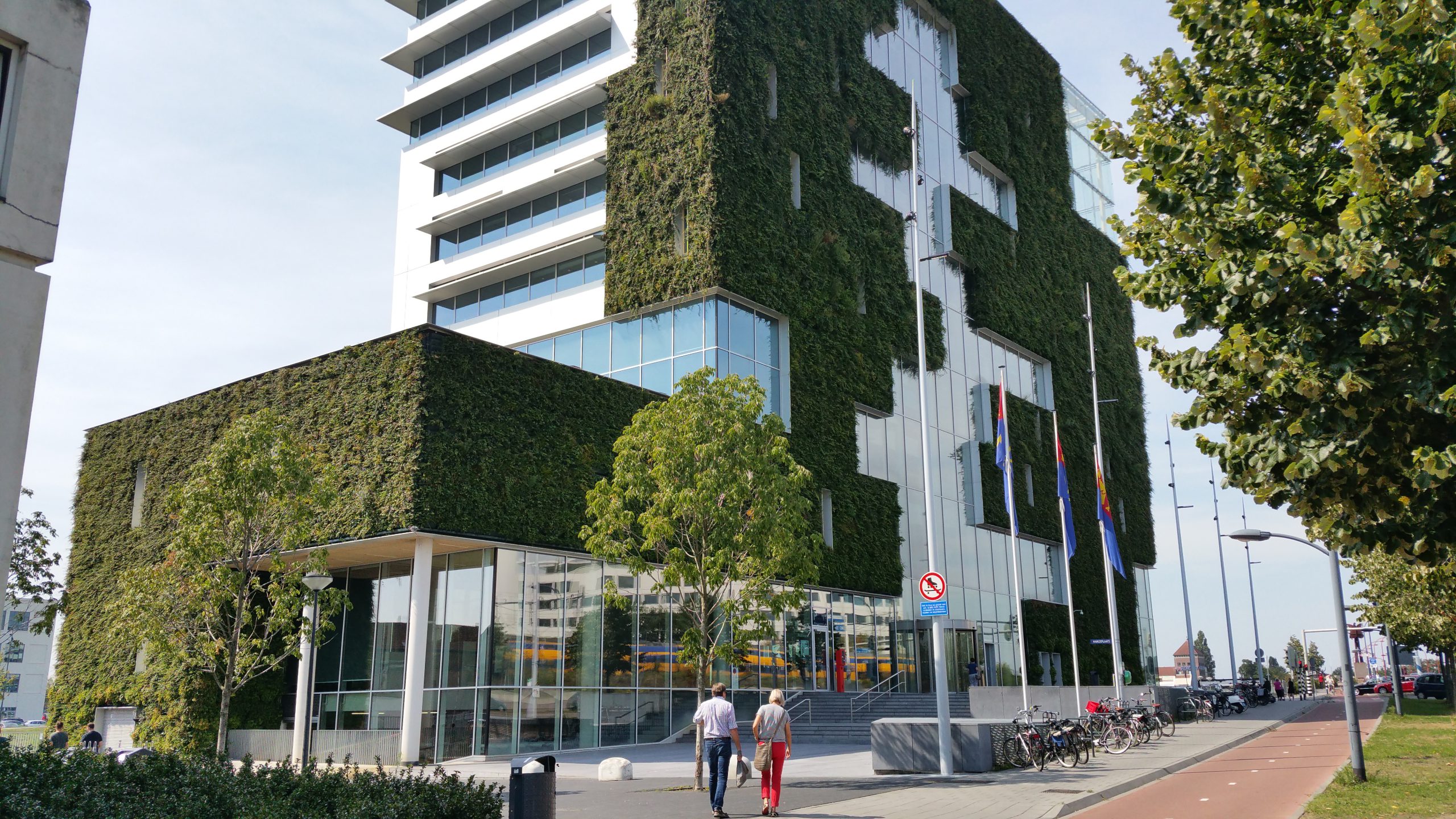
The Venlo city office, regenerative financing started in the Netherlands in 2015.
Cash flows work just like ecology. Economics and ecology share the same word root. Oikos. Greek for household. Interconnected. Costs and revenues are either asset (solid, solid matter, the money is tied up in stones) or cash flow (liquid, fluid, the money is readily available). But now that value is interwoven into data and everything has become digital, infinite natural patterns are possible.
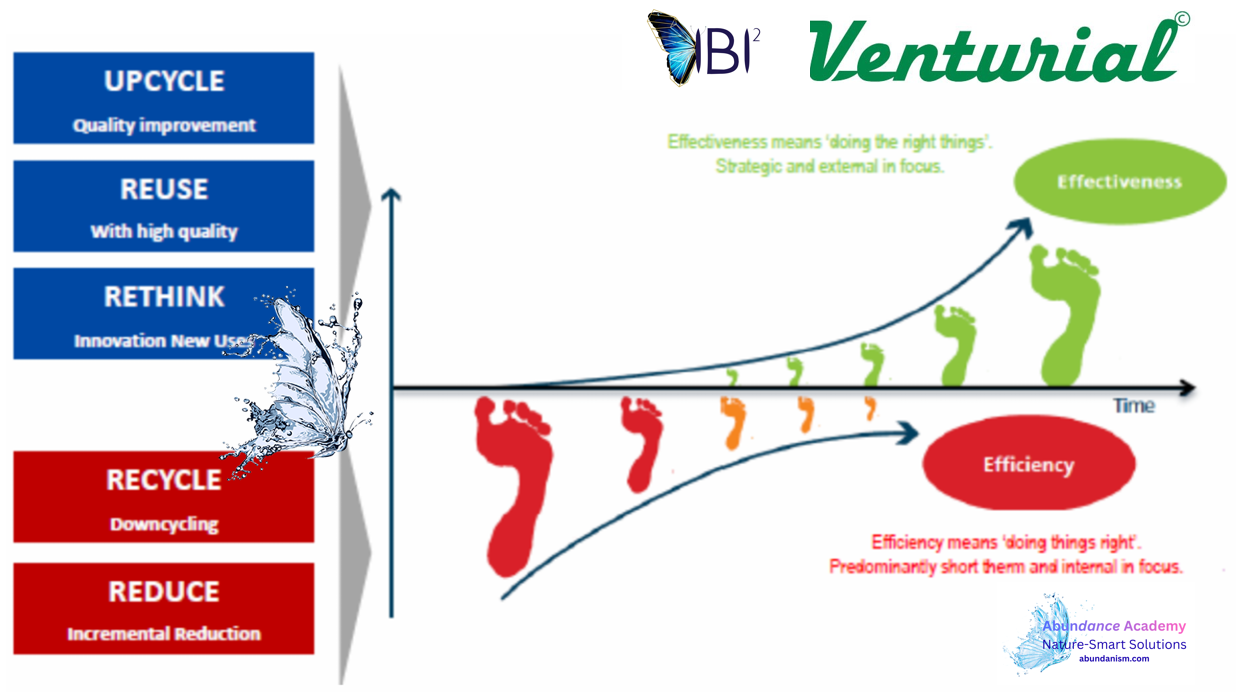
Are other value models possible? Of course.
But Venturial Value Models from the IBI2 consortium are the best value models for material innovation because they not only hold biomimicry (energy-efficiency and healthy) in high regard, but also think very practically about data, blockchains, effective, efficient, bio-based methods, capturing CO2 in the soil and building, and cashing the carbon credits by validating the official data-models.
Effective = Healthy. A breathing building. Efficiency means ensuring that not only the materials, but also the financial models are sound and become cheaper within the system.
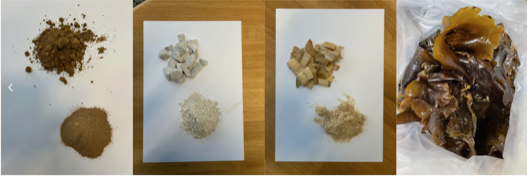
Picture: drying, analyzing, and fiberizing, powdering. No more reusing whole wood panels, but complete design freedom with old materials. Venturial.eu
Bio-based construction will give carbon credits if the models prove that CO2 is captured in the soil and materials. Trees such as pauwlonia trees or regenerative grasses. Lightweight and fast growing. The grasses can first be used for biogas, and then the sludge can be dried and used as building materials. Value upon value upon value.
But bio-based and healthy construction can also be achieved through reuse of (non) organic waste. What about dried, pulverized roof tiles? All possible! Dried and pulverized wood panels? Roof tiles made from Douwe Egberts coffee grounds? Dried hemp fibers, flax, bamboo, seaweed, tomato stalks, wheat husks, and more?
With Venturial, all material retain their value for years to come, and the residual value after its lifespan can be included in the full LCA.
No more devaluation but upgrading! Upcycling! Guaranteed returns can be captured at the beginning of the circular chain as ROI. The advantage is that data does not need to be released by the original manufacturer, who often relies on “patent protection”.
In short, “venturialing” for material passports in the circular economy has become a verb, and we are incredibly proud of that!