Dutch family businesses are the gems driving new sectors and elevating the innovation landscape of the Low Countries to new heights. Brainport’s chip and lighting industries emerged from Philips’ family business. But there are more. Studio Baan, The Institute for Sustainable Transition and Biomimicry Innovations (IBI2). And the latest branch on Limburg stem: Venturial.
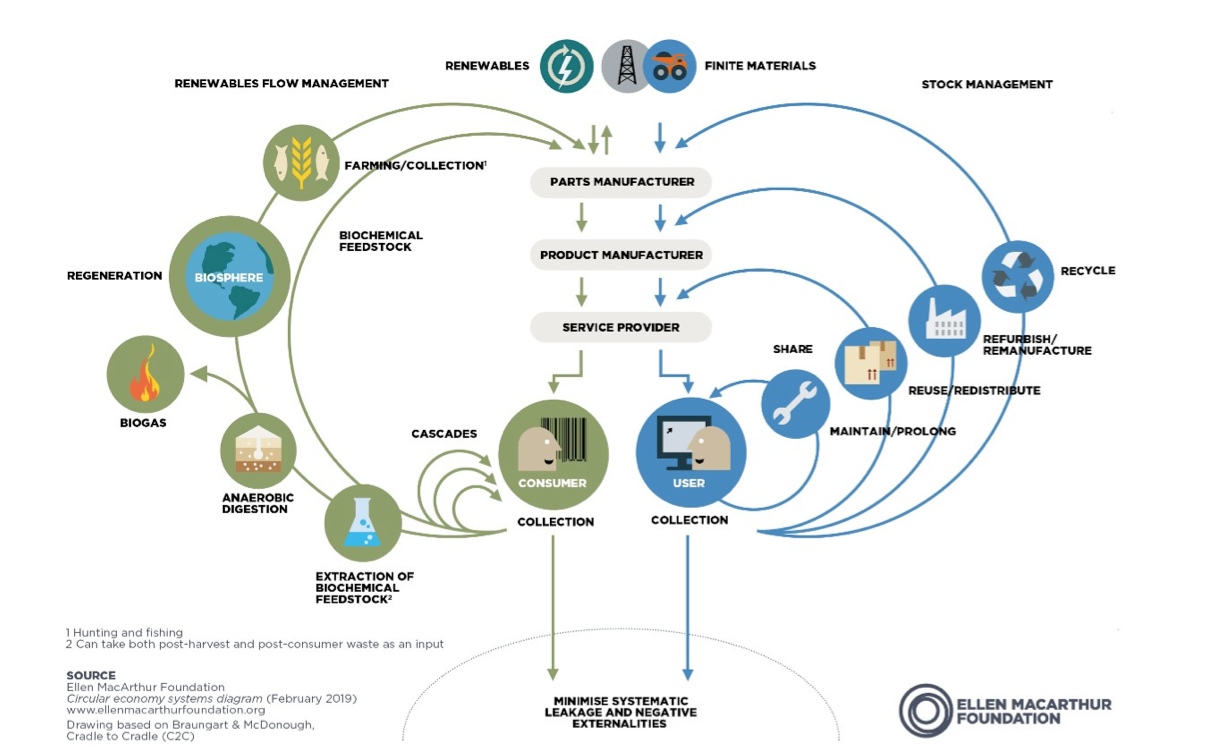
The world-famous circular economy image of sailor Ellen MacArthur, who started thinking in terms of value, energy, and closed systems.
Sandra and Stefan Baan – the owners of Venturial – are sailors, just like famous circular economy inventor Ellen MacArthur. Boaters understand more! They understand that our planet is a closed system. Elegant designs need autonomy and hyper-efficient use of space. And that you can mimic *by nature.
Venturial designed a hyper-energy-efficient drying-separating-pulverizing machine with sonic boom technology. Materials processing technology that gives young designers their freedom with waste materials back.
Giving young designers in the waste-is-food industry their complete design freedom back is invaluable. After all, it is the creative industry that drives Dutch Design innovation to higher levels.
Sandra & Stefan – the owners of Venturial – have a long history in materials innovation and transition agendas. Decades ago, they founded Studio Baan, an innovative biobased materials innovator connected to the Limburg materials campuses.
Vegan leather innovations. Textile innovation. Fashion. Interior design. Italian. German. European. Grass wallpaper, grass writing paper. More often harvestable than trees. Specialists in biobased materials and with a background in Higher Agricultural Education. Farming. Cultivation. *by nature is the same as *by design.
Biobased binders, such as biochemical glue that is not off-gassing in a healthy indoor climate, are crucial in sustainable transitions.
Insight into production processes, input materials, and waste substances is essential for healthy process transitions. The Baan consultant collectives are close friends of DSM, the Dutch Design gem currently conquering the world with food-grade chemicals and biopolymers 2-5x stronger than steel based on biomimicry spider silk expertise.
Tensile strength
A dragline silk’s tensile strength is comparable to that of high-grade alloy steel (450−2000 MPa),[1][2] and about half as strong as aramid filaments, such as Twaron or Kevlar (3000 MPa).[3] According to Spider Silkome Database, Clubiona vigil silk has the highest tensile strength.[4]
The Secret to Its Strength
Dutch Transitions
For decades, the Sustainable Crossthinkers – the Limburg manufacturing industry innovation meetings organized by Venturial’s mother company IBI2 – were a well-known concept in the Dutch Transition World,
DSM’s biomimicry product is now making waves in safety clothing, bulletproof vests, and fiber-reinforced materials science. Dutch manufacturing companies are since decades learning from each other and raising the entire EU materials agenda to a higher – and healthier – level.
A Dutch Design achievement to be proud of!
When systems thinking became “hip” in the Netherlands around 2012, Sandra and Stefan Baan, along with several other systems think tanks, were the ones who made biomimicry a major force in the Netherlands.
Biomimicry is mimicking nature’s principles and spatial relations math. The innovative concepts are based on maximizing value in the system, healthy biology, physics with waves, energy-efficient engineering, dynamics design, and food-grade biochemistry,
Nature is pure mathematics (geometry) after all, and we can broaden our perspectives, use different lenses with more than one element in the lens. We can think in terms of flows for healthy technology and materials. Systems thinking exponentialized.
Studio Baan was the first. The Institute for Sustainable Transitions and Biomimicry Innovations (IBI2) was second and now the third gem by the same founders is Venturial. A Dutch Design gem with only one goal:
Systems change to HEALTHY!
IBI2 and IBI3 Academy have become major names in the Netherlands, with transition professors like Jan Rotmans on their advisory board. Redesigning and optimizing *by nature and *by design. Jumping between top sectors, five Meuse River ports were redesigned into ESG-SDG gems. It was an IBI2 biomimicry contribution to the Rhombus Sustainable project. Crucial for systems thinking. Maximized for biodiversity, energy abundance, multimodal transport, emission reduction, Life Cycle Assessment (LCA), infrastructure, and ICT.
*by nature makes everything hyper-efficient, making abundance in several areas easier. Gross National Product (GNP) and the “polluter pays” law alone are insufficient. Cleanup jobs are cost jobs. Hospitals are costs. The business community can take responsibility for EVERYTHING their company produces, including waste streams. And fortunately, the Dutch industrial sectors that have increasingly embraced systems thinking since 2012, are doing so.
Venturial circular economy machines are used by builders to dry, pulverize, and separate materials such as wood panels with paints and stone roof tiles. Farmers use the machine for drying and pulverizing (manure and organic waste), biodigesters use the machines for reuse of wet waste streams full of nutrients and substance (slurry).
The sonic boom technology has been tested and upscaled for 40 materials now.
The final product of farmers, e.g manure granulate, can be returned to the river banks from which the nutrients originated. Animal manure has a better life cycle assessment (LCA) than artificial fertilizers and can be used in EU countries that are becoming deserts, such as Spain.
With the final result – an easy powder – young designers regain their design freedom with waste materials. The supply chains close again. Circular becomes easy.
How does biomimicry work? Our planet is a rapidly spinning planet, and that’s where many modern insights in physics, biology, and biochemistry originate. After landing on the moon, we realized that we only have a limited number of abundant materials. *by nature does almost everything differently than mechanical engineering. It simply creates completely different connections in full diversity.
Resilient because every problem has more than one solution. So, when one solution fails, others can take over the same functionality. That’s the case with neuro-networks and it’s the case with physical materials.
In the 1990s, this idea was dusted off and given a modern twist, with computers as design assistants. Biomimicry is, of course, as old as de road to Methusalem—our planet has been spinning with 1000+ km/h through the universe for 5 billion years. Ancient designers like Leonardo da Vinci, old and new aircraft manufacturers, Japanese bullet train designers, and others certainly looked to kingfishers, termite hive builders, and other natural design giants.
In the 1990s, the Belgian-Japanese think tank ZERI (zero emissions, the blue economy) and the USA Biomimicry Institute landed into the Dutch Design Studio Baan and inspired many Dutch systems-thinking design teams.
Venturial drew inspiration from the website Asknature.org, added a healthy dose of Dutch Design creativity and technology, and created a crucial technology for the circular economy. Drying, separating, and pulverizing with 20x less energy.
Hyper-energy-efficient sound waves inspired by the pistol shrimp and the Japanese bullet train, inspired by the kingfisher. A vacuum bubble and pushing through the sound barrier.
If you studied materials science at HAS, like Sandra Baan did, and you are an avid sea sailor (Stefan Baan), no sea is too high and no sonar and sonic is too complex. Dutch Design is a creative profession the Netherlands. Used for architecture, interiors, material development and more. Limburg is especially strong in biobased and inorganic material science. And regenerative and biomimicry claimed an innovative role in that field.
It’s not rocket science. It’s *by nature. And *by design
It took a bit of career spurts, but the Netherlands – a country in healthy transition – is finally on its way to practical, clean businesses. Connected in human-scale ecosystems and local EU supply chains. An “economy of scope” will only grow inward when assets are created inside your own currency scope, the euro.
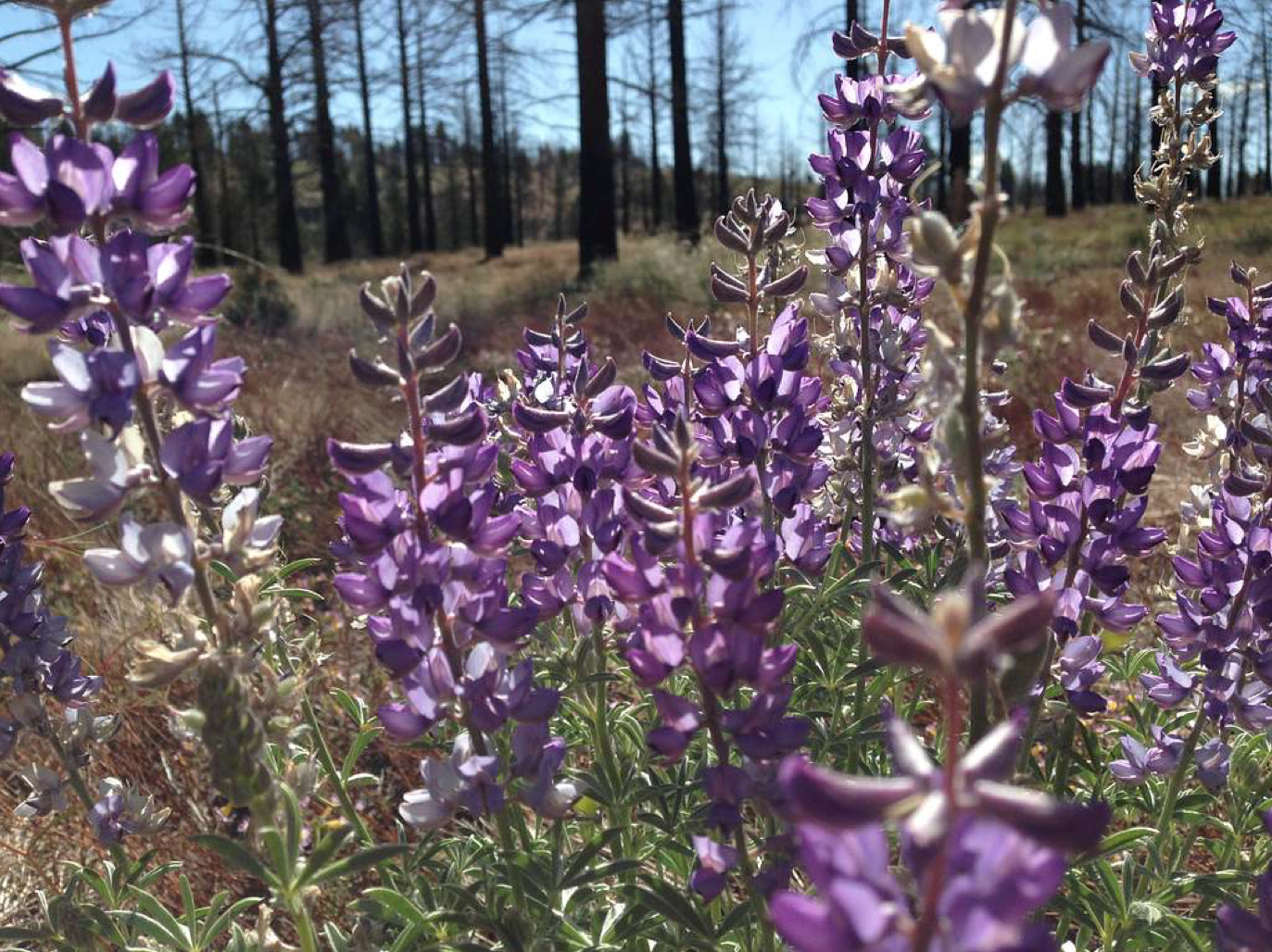
That’s what Venturial is working on. Keeping invaluable nutrients like manure and bound nitrogen for food production inside our EU scope. Spain can’t help it that climates are shifting and they get the desert winds. We can provide them with dried Dutch Delta manure. Together with all these modern, creative farmer pioneers, we are building a clean, Blue-Green Netherlands full of clovers (feed), lupines (feed), and beans (food).
The Netherlands does have a nitrogen overload problem due to being at the end of EU rivers. But Dutch farmers prevent trouble with nitrogen-fixing plants. Now that tulip bulbs are no longer edible due to pesticide overload, Dutch precision farmers turn to carbon credits over blockchains and Chili con Shiitake to get nice extra income stream into their business models.
Lupine fields are nitrogen farming *by nature