The Limburg family business Venturial is often called the “Pearl of the Dutch Circular Economy.” Brilliant in its biomimicry and energy-efficient technology. It boasts a clear, passionate business case within the waste-is-food chain. Solutions that were once complex suddenly become simple.
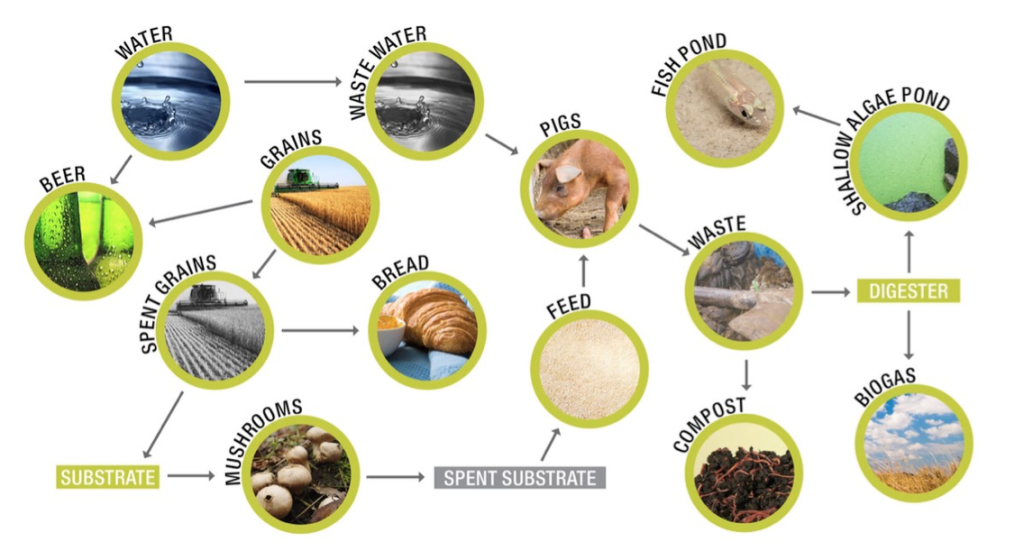
Model of a Dutch beer brewery and a bakery who adopted system thinking at the same time around 2012 as the founders of Venturial, Studio Baan. The Venturial drying machine can be used wherever wet waste streams are generated.
The Dutch industrial sector has a circular agenda: 2050 Circular. Some want Tata Steel to run on green hydrogen, which still needs a lot of energy, and it would result in 10-40% more steel slag as waste. This would cost the state €2 billion. The steel slag would then be recycled in road construction, with all the associated risks to drinking water.
Limburg’s innovative gem, Venturial, does things differently.
She gives circular economy designers their complete freedom back with powdered waste streams. Drying, separating, and pulverizing. Material passports to keep value in the system, even if that system has a long duration, like a building 40-200 years.
Petrochemicals, petroleum plastics, petroleum food additives, and PFAS are a legacy of the oil and chemical industry’s circular economy.
Those polluting industrial days are over, but Dutch politicians are only just beginning to grasp this. For decades, chemistry was all about oil. Now, chemistry is biochemistry. And physics. And biology as solutions. Healthy, and in some cases 5x stronger than steel, inspired by spidersilk. Biomimicry.
Now that chemistry is increasingly being replaced by biochemistry as a welcome development, new challenges arise, such as fire safety. But these can be solved with system thinking and physics—design, architectural bridges, and material combinations.
That’s what the Baan-family does in their companies. First Studio Baan, then the Institute for Sustainable Development and Biomimicry Innovations (IBI2). Now Venturial. Thinking outside the box. Thinking healthy healthy healthy!
With design, engineering, and material science.
Venturial mobile machines have been around for several years now. What does a Venturial do? Briefly explained? Supersonic. And sonic boom. *by sound.
The circular economy always keeps value longer – if possible, even forever – inside the system. No capital destruction. Venturial converts all kinds of organic and inorganic waste into dry powder, giving designers in the waste-is-food economy their complete design freedom back.
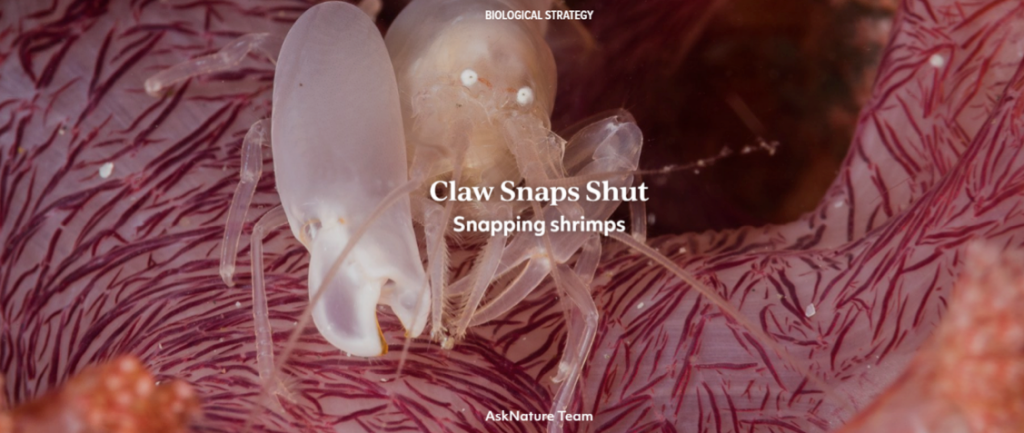
A Venturial machine is a drying-separating-pulverizing machine with physics – push through the sound barrier – sonic boom technology. Based on the bubble and shockwave of a pistol shrimp. The machine uses 20x less energy than standard sonic wave technology.
That’s what biomimicry always does: hyper energy efficient.
Regarding system thinking: all materials in a lifecycle analysis (LCA) can be calculated with one value: energy. In a circular economy, supply chains are shortened. Regions gain an abundance of healthy businesses. Laws are simplified and adapted to a biomimetic, design-savvy, energy-efficient and energy-abundant 21st century.
Just think energy = data = process and you understand. Energy is everything. Nature is spatial relations math, biology, and physics.
Drying: Venturial collaborates with biodigesters, the energy suppliers of the Netherlands. For example, Dutch farmers ferment their own organic waste locally and can now dry and recycle slurry for innovative, clean manufacturing. Ecosystems-thinking and all big, polluting energy factories can close their doors. Waste is energy.
Separation: If the Netherlands wants healthy materials, material passports are needed. Materials with, for example, toxic paint are classified differently from clean materials, so choices can quickly be made regarding what can be reused according to NEN standards. Air pollution accumulates more in an indoor environment than on the exterior of a building exposed to wind. Material passports ensure that the value of materials is retained, for example, throughout a building’s long lifespan. Maintenance becomes cheaper and rest value can make a building faster profitable.
With material passports, residual waste value, normally pollution, becomes a source of income in a circular growth economy. Healthy and growth of local macro-economy.
Pulverization: With pulverization, designers get their creative freedom back. Powder is much easier to process into new materials than, for example, entire wooden walls.
For instance, a visionary German architectural team from Stuttgart and Berlin is pursuing a path of biomimetic metamorphosis with two flexible membranes. And light, sound, and ventilation are regulated healthily *by design. Not by machines that need filter maintenance. Transforming a sick-building syndrome building into a renovated, beautiful, and healthy structure with two new snakeskins. Cylindrical math *by nature.
One skin outside and one skin inside, leaving the earthquake resistant structure intact, opening up other parts. Cylindrical design where light, heat, sound, logistics, and airflow are easily optimized.
Brilliantly flowing biomimicry with systems thinking and planetary knowledge.
The EU has a subsidy agenda for adding more biobased fibers to materials. Reused farm waste or fiber cultivation. Bamboo. Elephant grasses. Miscanthus. It reflects and does not blind pilots at Schiphol Airport than solar panels and keeps geese at a natural distance. Studio Baan did many projects with grass interiors. Now the pulverized version with more design freedom is available from Venturial.
Fiber polymers can be stronger than steel and non-corrosive. Has this closed the loop on Tata Steel and the steel slag headache? Time for a clean materials campus near Amsterdam, inspired by Limburg? Time to save 2 billion euro in subsidy for a process that will never be healthy, whereas Venturial and *by design is doing the same work elegantly and give vehicle builders a lightweight alternative to steel?
*by planet only a few abundant substances are used and designed in open structures for functionality. Bones are almost the same material as skin. Open in structure. Tensile strength, hardness, or flexibility are merely different organizations of structures. That’s all. We can mimic this easily with biobased powders.
One Venturial biobased project is the pulverizing of wooden walls with paint and without paint. A Venturial inorganic project is pulverizing roof tiles. Stone. Another project is done with cow manure. Why not? Cow manure is energy that came from up the river to the Dutch Delta and became waste. We can send it back to degraded areas.
Next steps? Coffee grounds from Douwe Egberts being reused in sportswear because coffee dissolves odors so well? Just like *by nature! Pixelate everything to create something new, something completely different. With 3D printing. With polymer processes. Textiles?
Or or or and and and… Endless possibilities.
Young designer dreams are becoming simpler and fully circular! Nature is always evolving in young, modern futures. And with today’s 4D design computers, rethinking like nature has become easier.
Natural principles such as metamorphosis, physics, vacuum bubbles, splitting and deposition, biochemistry, composting of residual materials, and everything “timed degradable” are the future for a healthy humanity.
Because pollution is just accumulation, a buildup of (too) harsh substances.
Timely transformation into powder and new design freedom is a MUST!
Because we do, of course, live in the Anthropocene. Systems thinking and *by design are indispensable human 21st-century skills. The creative Baan family and Venturial are worthy examples of a Dutch Healthy Innovation Hub.
Long-term vision. Modern, impactful business.
Inspired *by design, planet, and natural processes!
The pistol shrimp uses a bubble of vacuum (physics) and pushes with one blow through the sound barrier. https://asknature.org/strategy/claw-snaps-shut/ A Venturial circular economy machine mimics this process and thus ensures that the sonic wave technology is 20x more energy-efficient than normal sonic waves. One fierce push and the sound barrier fix the process.
With biomimicry, we let nature (physics) do the energy-work for us. Biomimicry is the #1 innovation technique right now in the world just because of that. Energy congestion!
Explore more nature with Venturial technology.